VIP Research Overview: Neuropeptide Kinetics & VPAC Receptor Assays
Introduction & Biochemical Profile
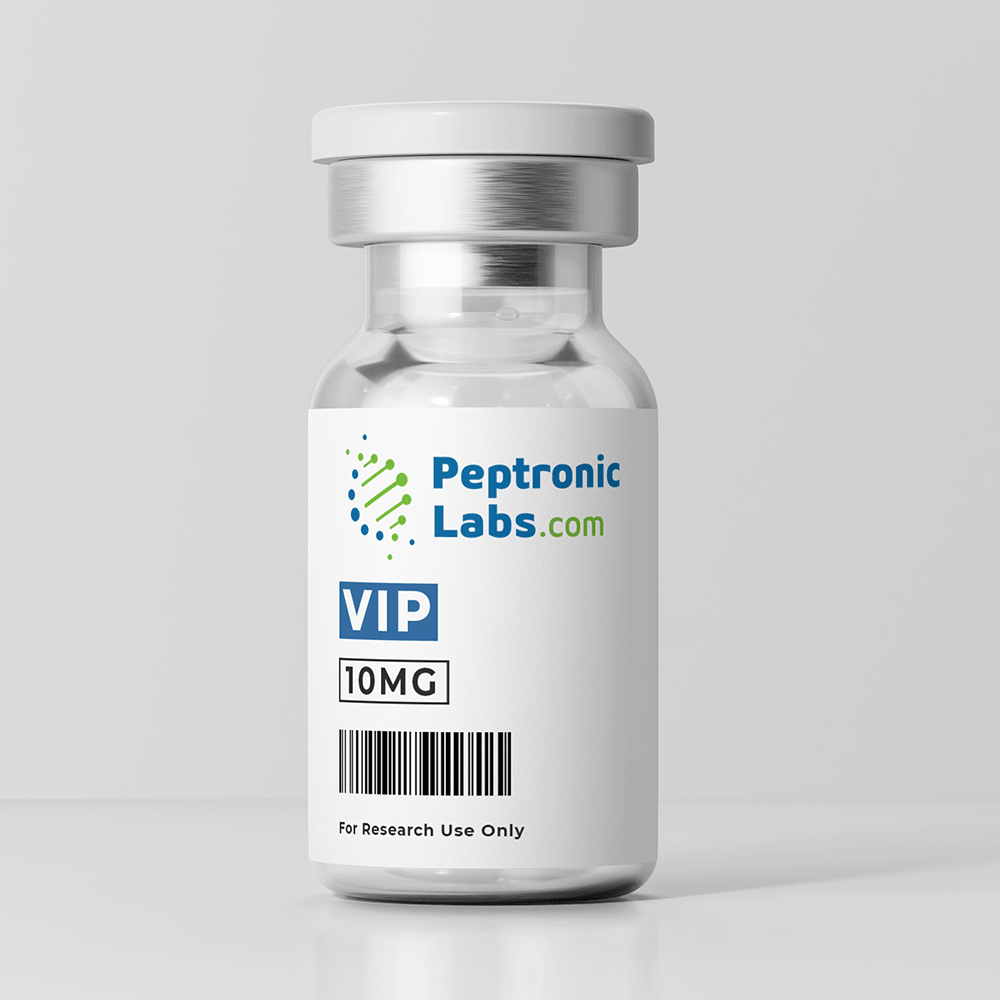
VIP research focuses on Vasoactive Intestinal Peptide, a naturally occurring 28-amino-acid neuropeptide belonging to the glucagon/secretin superfamily. In biochemical and neuroendocrine research, VIP is studied extensively as a primary signaling molecule involved in neuroimmunology, cAMP second-messenger activation, and G-protein-coupled receptor dynamics.
Unlike finished consumer health products or therapeutic medications, VIP is utilized in laboratory settings as an analytical neuropeptide reagent to examine VPAC1 and VPAC2 receptor binding kinetics, cellular immune pathway modulation, and smooth muscle signaling in isolated tissue cultures. Its high solubility in aqueous media enables researchers to conduct consistent, reproducible receptor affinity and second-messenger assays across diverse cellular models.
Preclinical research into VIP centers around several core signaling cascades:
VPAC1 and VPAC2 Receptor Activation: Investigators utilize VIP to activate high-affinity G-protein-coupled receptors (VPAC1 and VPAC2), measuring downstream adenylate cyclase stimulation and intracellular cAMP accumulation.
Neuroimmunological Signaling: Laboratory protocols examine peptide interactions with immune cell subpopulations (such as macrophages and T-lymphocytes), quantifying cytokine expression shifts and cellular inflammatory models in vitro.
Smooth Muscle Signal Transduction: Research models evaluate VIP interactions with vascular and enteric smooth muscle tissue preparations, observing nitric oxide synthase expression and relaxation pathways.
In Vitro Methodology & Experimental Protocols
In bioanalytical chemistry and neurobiology, VIP is evaluated using standardized laboratory protocols:
cAMP Accumulation Assays: Quantifying intracellular cyclic AMP synthesis rates following VPAC receptor activation in cell culture models.
High-Performance Liquid Chromatography (HPLC): Verifying chemical purity (≥98.0%), peptide sequence identity, and stability under experimental buffer conditions.
Competitive Radioligand Binding Assays: Determining binding affinities (Kd) and receptor displacement parameters across VPAC receptor subtypes.
Frequently Asked Questions (FAQ)
What is VIP in biochemical research?
VIP (Vasoactive Intestinal Peptide) is a 28-amino-acid neuropeptide used in laboratory environments to study VPAC receptor activation, intracellular cAMP signaling, and neuroimmunology.
How is VIP evaluated in laboratory settings?
Researchers analyze VIP using in vitro cell culture models, radioimmunoassay/ELISA binding techniques, and high-performance liquid chromatography (HPLC) purity verification.
What is the significance of VPAC1 and VPAC2 receptors?
VPAC1 and VPAC2 are G-protein-coupled receptors through which VIP initiates intracellular signaling cascades, serving as critical targets for studying second-messenger activation and gene regulation.
Is VIP approved for clinical, therapeutic, or human use?
No. VIP supplied by Peptronic Labs is an unapproved chemical reagent. It is not approved by regulatory bodies (such as the FDA or MHRA) for human consumption, clinical treatment, or dietary use, and is restricted strictly to non-clinical laboratory research.
Important Notice: All information provided on this page and across our catalog is strictly for laboratory research, educational, and analytical purposes only. These compounds are unapproved chemical reagents and are not intended for human consumption, diagnostic, therapeutic, clinical, veterinary, or dietary use of any kind.
Important Notice & Disclaimer: All products available through Peptronic Labs, including peptides, small-molecule compounds, and biochemical reagents, are strictly intended for laboratory research, educational, and analytical purposes only. These products are unapproved chemical reagents and are not intended for human consumption, clinical use, diagnostic procedures, therapeutic treatments, veterinary administration, or dietary supplementation of any kind. Purchasers and investigators must ensure proper handling, appropriate laboratory protocols, and full compliance with applicable local and international regulations.
In laboratory research and molecular biology, the study of biochemical messengers is a primary focus for understanding cellular communication and metabolic signaling.
Introduction & Biochemical Profile BPC-157 Research Overview: Pentadecapeptide Kinetics & Angiogenic Pathways Introduction & Biochemical Profile BPC-157 (Body Protection Compound-157) is a synthetic 15-amino acid peptide sequence derived from a protective protein isolated from human gastric juice. In biochemical and cellular research, BPC-157 is investigated for its pleiotropic effects, specifically its ability to modulate the […]
MOTS-C (Mitochondrial Open Reading Frame of the 12S rRNA-c) is a mitochondrial-derived peptide encoded within the 12S ribosomal RNA gene. In 2026 laboratory research, it is recognized as a key regulator of metabolic homeostasis and mitochondrial function. Its unique origin within the mitochondrial genome makes it a primary subject for studying the communication between mitochondria and the nucleus in metabolic signaling research.