

Understanding Vasoactive Intestinal Peptide (VIP): Structure & Biological Signaling
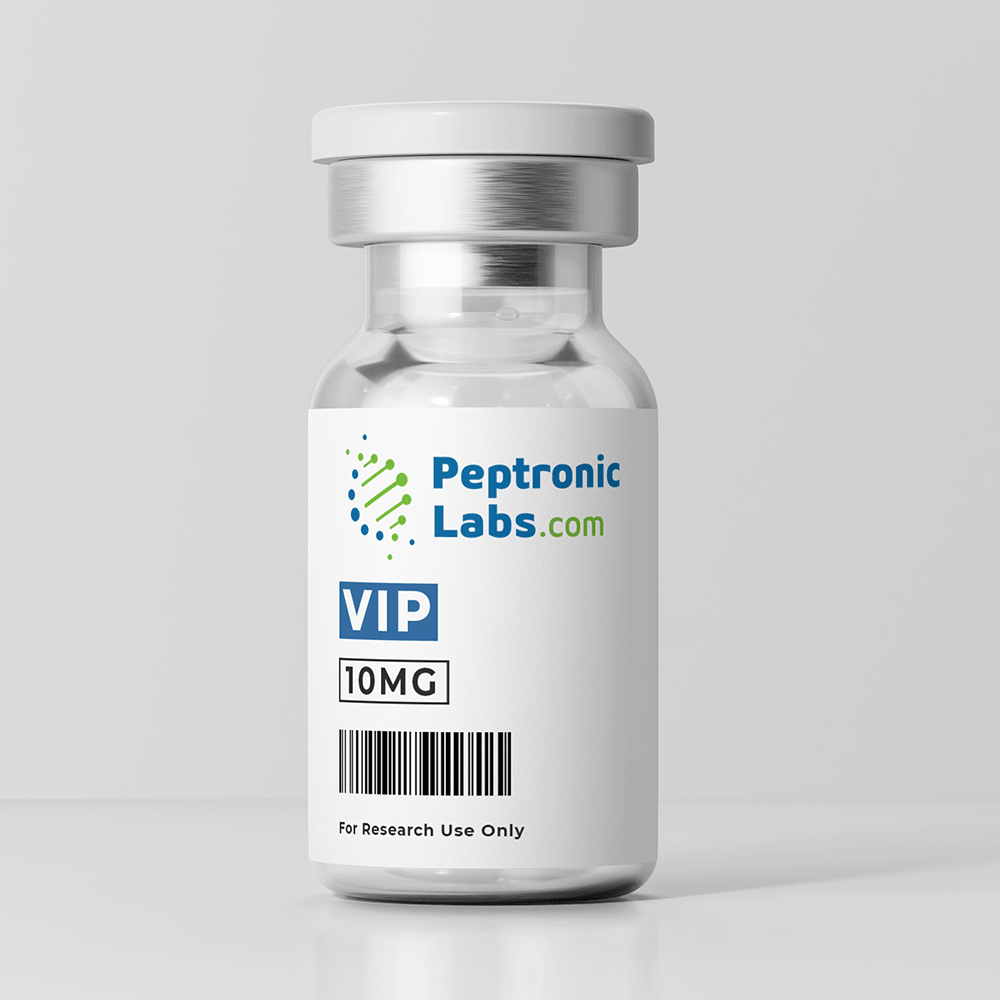
Vasoactive Intestinal Peptide (VIP) is a naturally occurring neuropeptide composed of 28 amino acids. First identified in the 1970s, VIP is widely studied in biochemistry for its role as a signaling molecule within the central nervous system, digestive system, and cellular immune pathways.
Below is an overview of VIP’s biochemical properties, receptor mechanics, and primary areas of ongoing laboratory research.
Biochemical Profile and Receptor Interactions
VIP belongs to the glucagon/secretin superfamily of peptide hormones. It is produced by enteric neurons, specific brain regions, and certain immune cell lines.
Key Chemical Properties:
- Sequence Length: 28 amino acids
- Receptor Affinity: Binds primarily to G-protein-coupled receptors VPAC1 and VPAC2
- Solubility & Half-Life: Highly water-soluble with a rapid metabolic turnover rate in biological tissue.
When VIP binds to VPAC1 or VPAC2 receptors, it activates the intracellular adenylate cyclase enzyme pathway. This leads to an increase in cyclic adenosine monophosphate (cAMP) and subsequent activation of Protein Kinase A (PKA). These intracellular cascades play a standard role in regulating cellular signaling, smooth muscle relaxation, and fluid balance in tissue models.
Primary Areas of Biological Research
In academic and physiological research, scientists evaluate how VIP interacts with various organ systems:
1. Neurotransmission & Synaptic Pathways
Within the central and peripheral nervous systems, VIP functions as a non-adrenergic, non-cholinergic (NANC) neurotransmitter. Researchers study its ability to co-release alongside other neurotransmitters (such as acetylcholine) to observe how it influences synaptic plasticity and routine neuronal signaling.
2. Immune System Cell Signaling
VIP is studied in immunology for its interaction with immune cell lines, including T-cells and macrophages. In laboratory models, researchers observe how VIP receptor activation influences the balance between pro-inflammatory and anti-inflammatory signaling molecules (cytokines).
3. Gastrointestinal & Smooth Muscle Physiology
In digestive physiology, VIP is known for promoting smooth muscle relaxation and regulating fluid and electrolyte transport across intestinal epithelial membranes. These mechanisms are evaluated to better understand baseline gut motility and metabolic homeostasis.
Quality and Research Considerations
When reviewing peptide literature and analytical standards, key factors include:
- Purity & Verification: Laboratory materials are typically verified via High-Performance Liquid Chromatography (HPLC) and Mass Spectrometry (MS) to confirm sequence integrity.
- Transparent Information: Scientific content should focus on established biochemical mechanisms rather than unverified health or therapeutic claims.
- Professional Guidance: Individuals exploring nutritional or specialized peptide research should always consult a qualified healthcare professional.
Disclaimer & Regulatory Notice
These statements have not been evaluated by the Food and Drug Administration (FDA) or local health authorities. This content is intended strictly for general informational and educational purposes. It is not intended to diagnose, treat, cure, or prevent any disease or medical condition. Always consult a licensed healthcare provider regarding health questions or before starting any new supplement or wellness routine.
External Resources on Vasoactive Intestinal Peptide (VIP)
- Vasoactive Intestinal Peptide Overview on [Wikipedia](https://en.wikipedia.org/wiki/Vasoactive_intestinal_peptide)
- Neuropeptide with Pleiotropic Immune Functions Study on [PubMed Central](https://pmc.ncbi.nlm.nih.gov/articles/PMC3883350/)
- VIP Peptide Benefits Guide on [Meto](https://meto.co/blog/vip-peptide-vasoactive-intestinal-peptide-benefits)
- VIP Peptide Immune Modulation Research on [Superpower](https://superpower.com/guides/peptides/vip)
LEGAL DISCLAIMER & INTENDED USE The products listed on this website are sold exclusively for in-vitro laboratory research and analytical purposes only. These products are not intended for human or veterinary use, consumption, injection, or therapeutic application. They are not dietary supplements, drugs, or medical devices. By purchasing from this site, the user acknowledges that they are a qualified professional or researcher and agrees to handle all materials in accordance with established chemical safety protocols.